93-year-old veteran says UN forces should have pushed farther north
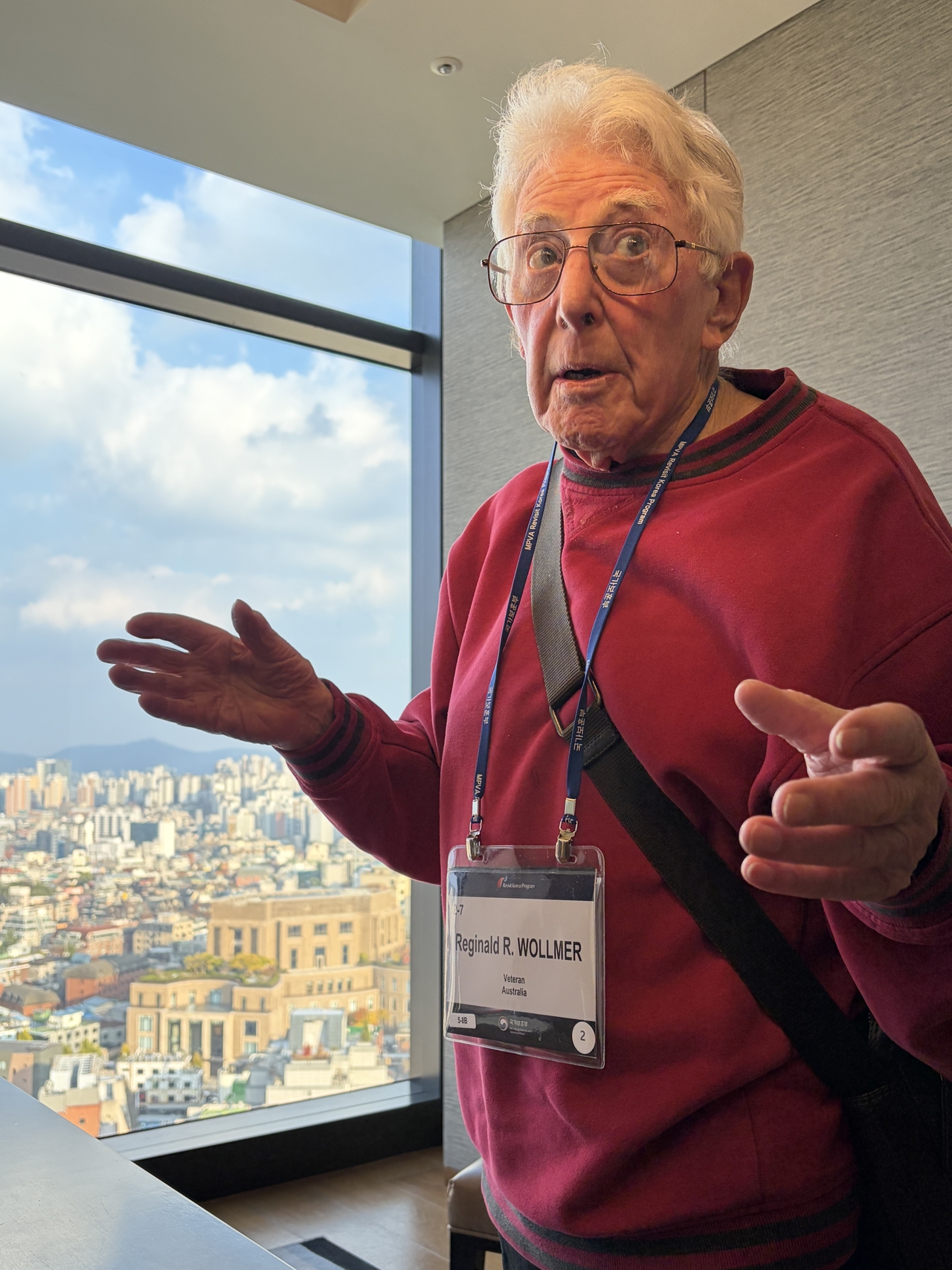
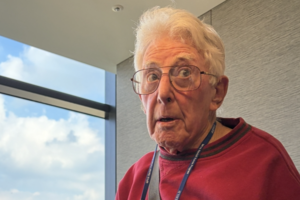
At just 18, Reginald R. Wollmer left Australia to serve in the Korean War in 1951. Now 93, the veteran looks back on his experiences defending a country he barely knew at the time.
Wollmer recalled poorly charted waterways and unpredictable tides along the Han River during the 1950-53 Korean War as his Australian warship was exposed to the threat of enemy fire.
"We didn't know what the water depths were. We didn't know what the tides were," Wollmer said in an interview with The Korea Herald Thursday. The interview took place on the occasion of his visit to the country at the invitation of the Ministry of Patriots and Veterans Affairs.
Sailors aboard the vessel measured water depths from small boats even while under attack on the river, which now penetrates South Korea's capital city of Seoul and has become the symbol of the country's rapid growth.
"When we were under fire, we were under heavy fire," he said. "Were they going to hit us? Were they going to sink us?"
He also recounted how he helped protect starving Koreans during his service on the war-stricken Han River, as his mission was more than just fighting enemy forces.
During a patrol operation aboard Australian naval vessels along the Han River, he noticed that residents were struggling to survive and suggested distributing the ship's surplus food to them.
"I spoke to the ship's captain," Wollmer said, recalling how he proposed sending the excess food ashore to people who were "obviously starving."
The captain agreed and instructed him to change into his combat gear, pack the food and accompany it aboard a small boat to an island whose name he could no longer recall after more than seven decades.
"We were there to protect them, not attack them," he said.
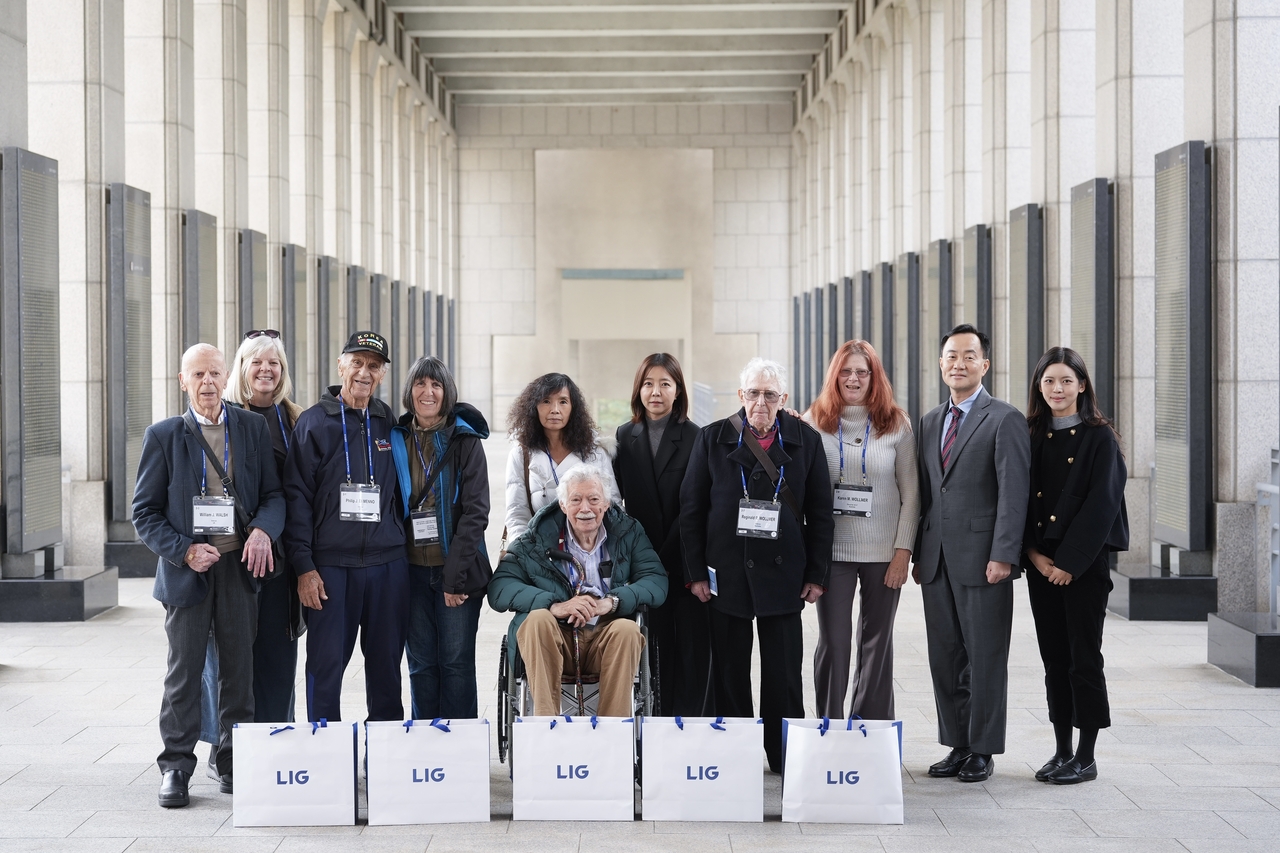
Wollmer came to South Korea under the ministry's invitation program that kicked off on Nov. 8 and ran through Friday, attending commemorative events in Busan, including the annual Turn Toward Busan remembrance ceremony. He previously visited the country in 2014 and 2022.
According to the ministry, Wollmer served in Korea on two separate deployments, from May 8, 1951, to Jan. 30, 1952, and from Nov. 6, 1953, to July 16, 1954, with his second deployment coming after the July 1953 armistice.
'We should have gone further'
Wollmer served in the Royal Australian Navy as part of the United Nations Command-led multinational forces during the Korean War aboard vessels including the HMAS Murchison.
He initially served as a radar operator, helping calculate the range and bearing of enemy targets for naval gunfire before being reassigned to the ship's galley as a cook.
Reflecting on the war's outcome, the Australian veteran argued that UN forces should have advanced farther north to reunify the Korean Peninsula rather than leaving it divided.
"I believe we should have gone further," he said. "They should have been driven further north, further north, further north."
Wollmer said UN forces should have pressed their advantage when North Korean and Chinese forces were retreating, rather than stopping short of reunifying the peninsula under a free, democratic system.
He said that the division had prevented lasting peace and separated families across the two Koreas.
Wollmer pointed to the suffering of families separated by the border, asking how many South Koreans still had relatives living on the other side of the Demilitarized Zone.
Asked whether securing the entire peninsula up to the Chinese border could have prevented such suffering, Wollmer replied, "That is correct. That is correct."
"China should have had enough decency to say, 'Okay, this is the Chinese border. This is where our country ends,'" he said.
The UN Command was established in July 1950 to coordinate multinational forces defending South Korea following North Korea's invasion.
After the 1953 Armistice Agreement, the UNC remained responsible for maintaining the armistice, while the South Korea-US Combined Forces Command, established in 1978, later assumed responsibility for combined defense preparations.
The UNC, CFC and US Forces Korea, which maintains approximately 28,500 American troops in South Korea, are headed by US Army Gen. Xavier Brunson, who commands all three organizations.
Democracy, a shared value across generations
Wollmer said he volunteered for the Australian Navy because he believed he had a duty to defend his country amid global instability.
"I joined because I wanted to fight for my country," he said. "There was trouble all around the world, and I felt that I had to put myself forward to look after my country."
"I volunteered to support my country, and my government thought that they should support the Korean people," he said.
Asked what came to mind when he thought of the Han River today, Wollmer repeatedly exclaimed, "Wow. Wow. Wow."
He praised South Korea's economic and technological progress, contrasting today's prosperity with the poverty and devastation he witnessed decades earlier, as well as the South Korean government's treatment of foreign veterans.
For Wollmer, the lasting lesson of the war was the importance of democracy, which he described as allowing people to determine their own future and elect their government.
"A peaceful democracy," he said, when asked to sum up South Korea's achievements.
Looking back on his decision to volunteer, Wollmer left no doubt when asked whether he would serve in Korea again if he were 18 and faced the same choice.
"Yes, I would," he said.
flylikekite@heraldcorp.com